Korea Travel Goal: Recording ATEEZ "HALAZIA" at KING STUDIO
An ATINY from the USA came back to KING STUDIO for a third session and picked ATEEZ "HALAZIA" — a male dance track that had to move up three semitones before she could sing it. Here is how a DIAMOND recording day actually runs, and why it belongs on your Korea Travel list.
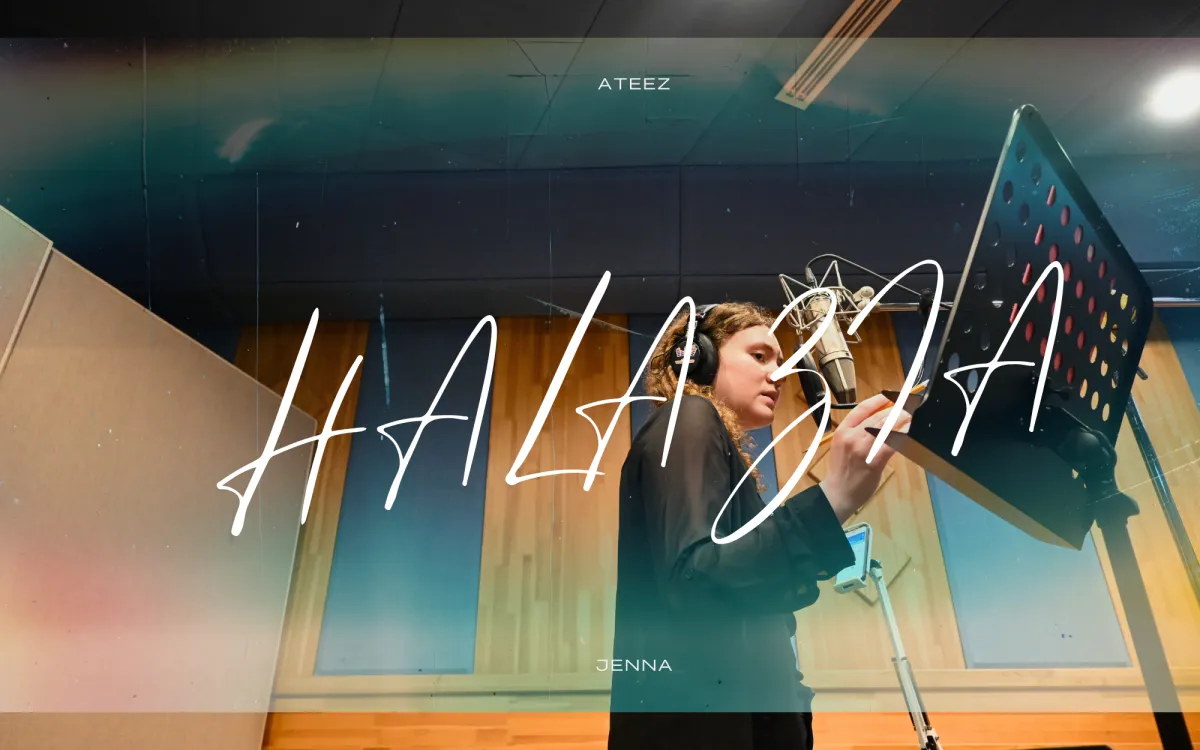
Yes — as an international visitor you can book a real Seoul recording studio, sing an ATEEZ title track in it, and leave with a mixed and mastered file of your own voice. That is exactly what happened here. An ATINY from the USA, in Seoul with her mother and younger brother for a concert, carved out a separate afternoon and recorded HALAZIA on our DIAMOND service. She had been here before — twice — and she came back for the hardest song she had attempted yet. If a studio day is going on your Korea Travel list, this is what one actually looks like from the inside.
- Why She Chose ATEEZ "HALAZIA"
- Inside a DIAMOND Session: Recording HALAZIA Step by Step
- In Her Own Words
- Frequently Asked Questions
Why She Chose ATEEZ "HALAZIA"
Jenna is American, and her reason for choosing this song starts with something structural rather than sentimental: the K-pop idol group format simply does not exist in the United States in the same shape. There are boy bands, there are vocal groups, there are dance acts — but the specific thing ATEEZ do, where eight members split a single track into layered parts and build a performance out of it, is not something she can find at home. That is the music she listens to regularly, and it is the reason a recording booth in Seoul is worth building a day around.
This was her third visit to KING STUDIO. The first was about four months earlier. The second was two days before this session — she was back in Korea with her mom and her younger brother for a Forestella concert, and once she was already in the city, one studio day was not enough. She made separate time and returned within forty-eight hours.
That two-day gap matters, because it changed what she was looking for. By her own account the first song of this trip had gone comfortably. This time she wanted the opposite, and she said so afterwards in plain terms — she wanted something that was not comfortable. HALAZIA is the title track of ATEEZ's single album Spin Off : From The Witness, released in December 2022 through KQ Entertainment — a song built on a heavy bass line and a chorus that keeps pushing upward rather than resolving. It went on to win on Music Bank the following January, and the album charted on the Billboard 200. For a listener, it is a dramatic, satisfying track. For a solo vocalist standing in a booth, it is a different proposition entirely.
It is also worth saying what she did not do. She did not pick the easiest ATEEZ track, and she did not pick the one she had already rehearsed at home for months. She picked a title track written for eight male voices and brought it to a booth where exactly one person would be singing every part of it.
Two problems were visible before she sang a note. The first is range: HALAZIA is a male dance track, written and performed in a male register across eight voices. A solo female vocalist cannot simply step into that key and expect it to sit anywhere useful. The second is architecture: an idol title track is not one clean vocal line. It is a main vocal, plus doubling underneath it to give the line weight, plus ad-libs threaded around it. Take those layers away and the song sounds thin no matter how accurately you sing the melody. Both problems had to be solved in the room, in real time — and solving them is what the session became.
Inside a DIAMOND Session: Recording HALAZIA Step by Step
STEP 1 Staff intro and setting the goal for the day
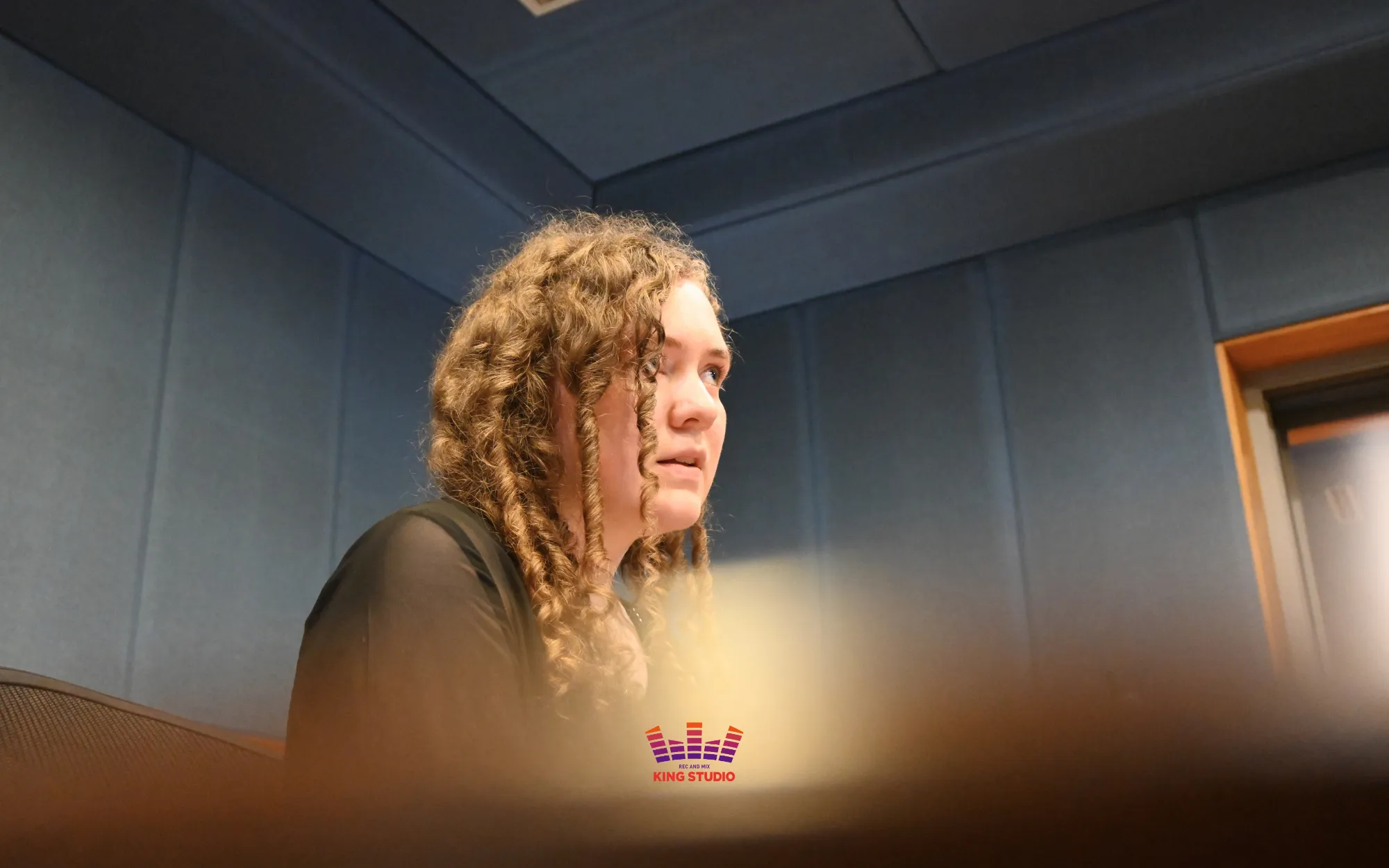
Manager Min met Jenna at the door — a shorter conversation than a first visit needs, since she had been in the room two days earlier. Vocal director Yena framed the session before anything was plugged in: because this is an idol track, the main vocal alone would not carry it. Doubling and ad-libs were named as the priorities of the day from the first minute, which meant the schedule was built backwards from those layers rather than treating them as an afterthought at the end. Producer Aiden set up the session accordingly. Naming the layers first rather than last is a scheduling decision as much as an artistic one: doubling and ad-libs need vocal energy that is not left over at the end of a two-hour session, so the day was ordered to protect them.
STEP 2 Studio tour and headphone chain
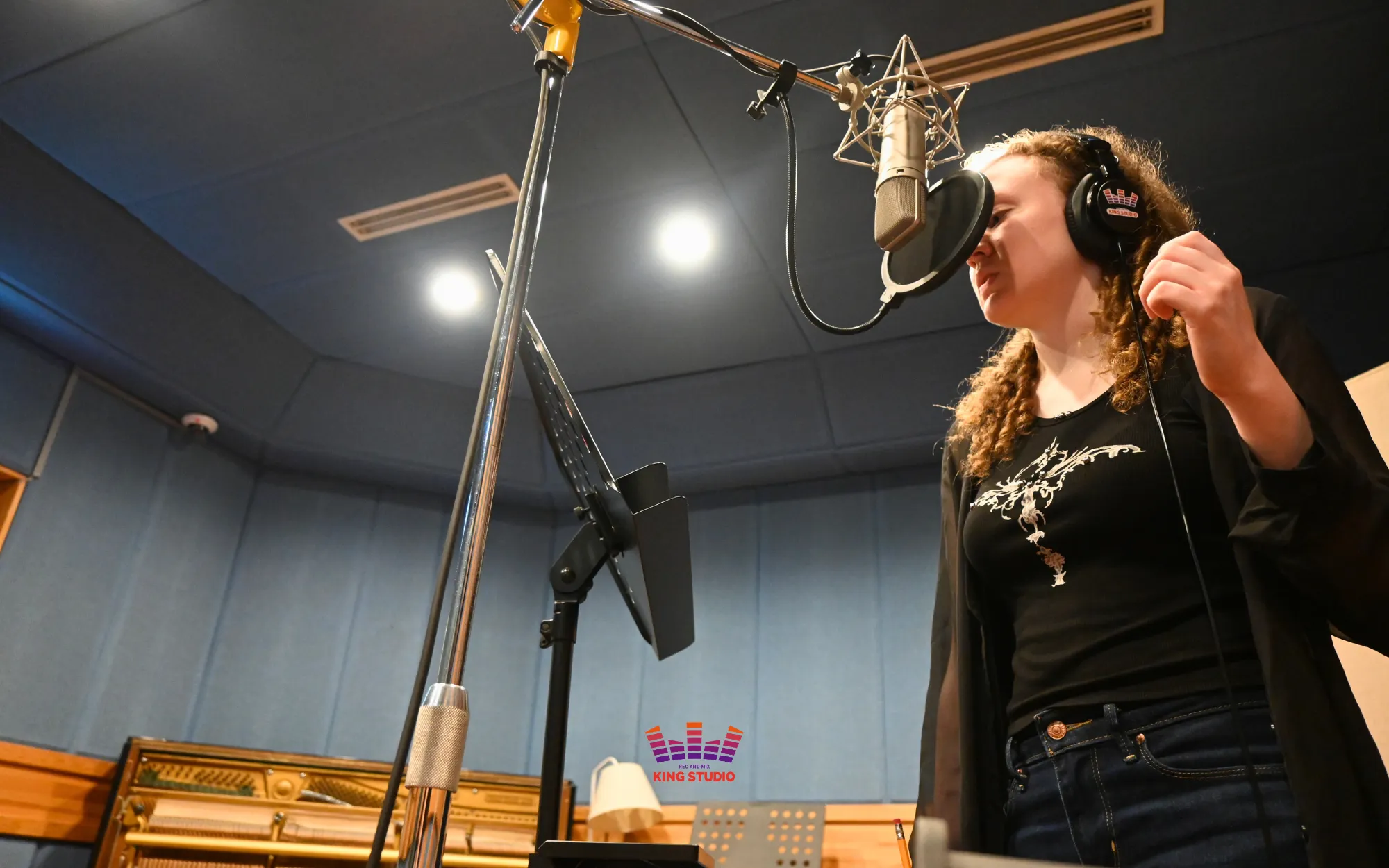
The room was configured exactly as it had been two days before — same booth, same monitoring chain, same headphone mix balance that had already been dialled in for her voice. Returning within forty-eight hours removed an entire setup stage from the day, which is time that went into recording instead.
STEP 3 Warm-up and key check
The warm-up doubled as a measurement. Singing against the original key made the problem immediate and audible: the track sat far too low. Yena moved it up roughly three semitones to find where Jenna's voice would actually have room to work rather than sink under the arrangement.
STEP 4 Rehearsal and locking the key
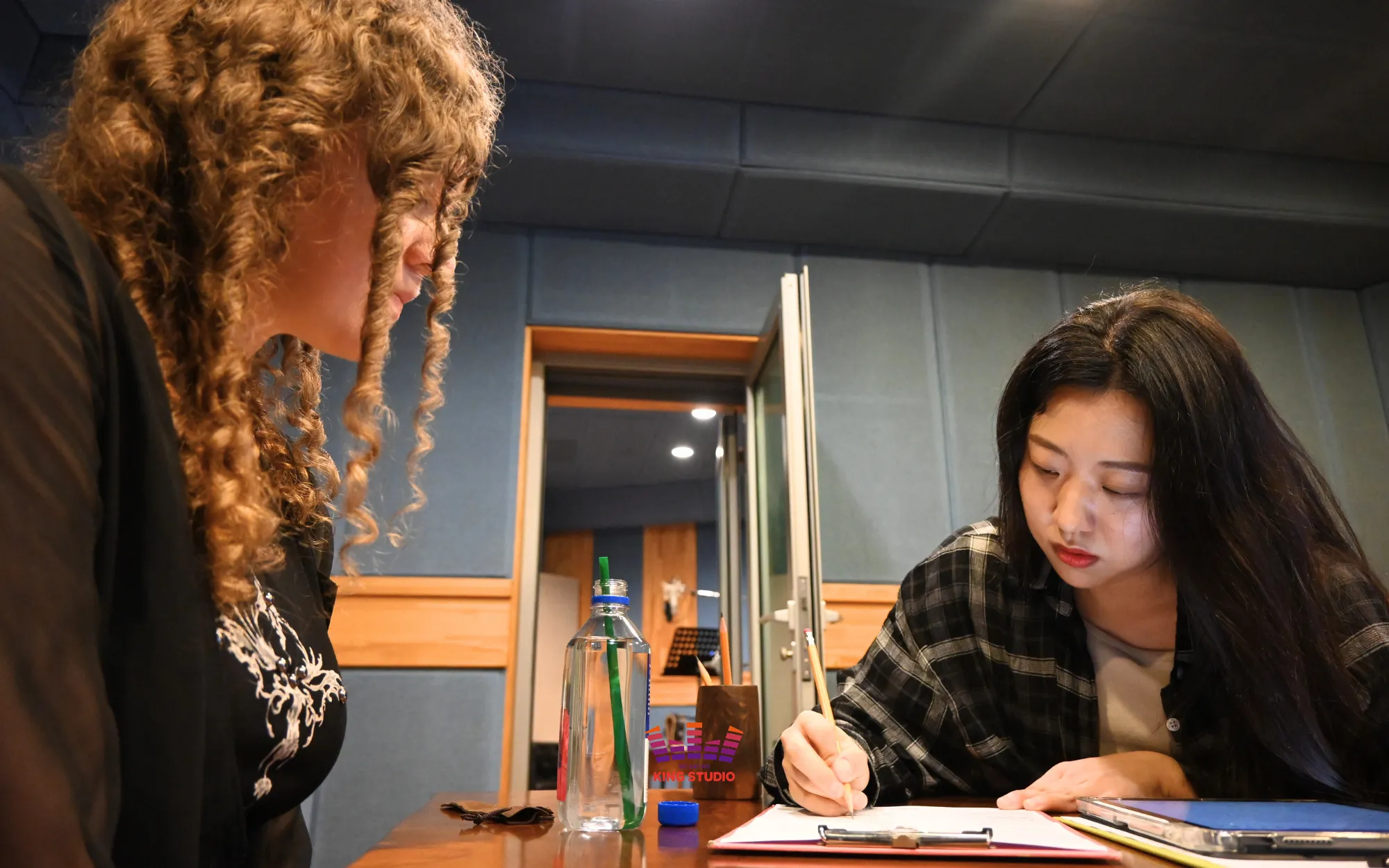
This was the heart of the session. Because HALAZIA was written for male vocalists in a male dance-track register, the original key put the melody well below where a solo female voice can produce anything but a strained, buried tone. The fix is not cosmetic — a key change alters where every phrase sits against the instrumental, which syllables land on strong beats, and how much air each line needs.
Yena and Jenna ran the song through rehearsal at the raised key rather than deciding on paper. Three semitones is a deliberate, moderate move: enough to lift the melody out of the basement of her range, not so much that the top of the chorus becomes a shout. A larger jump would have solved the low end and created a worse problem at the peak.
The shift was tested phrase by phrase and then confirmed, which is the point where the song stopped being a track Jenna liked and became a track she could actually sing. Everything recorded afterwards was built on that decision — every doubling pass, every ad-lib, every layer stacked later in the day sits in the key that was settled here.
STEP 5 Idol-style recording: main, doubling, ad-libs, dubbing
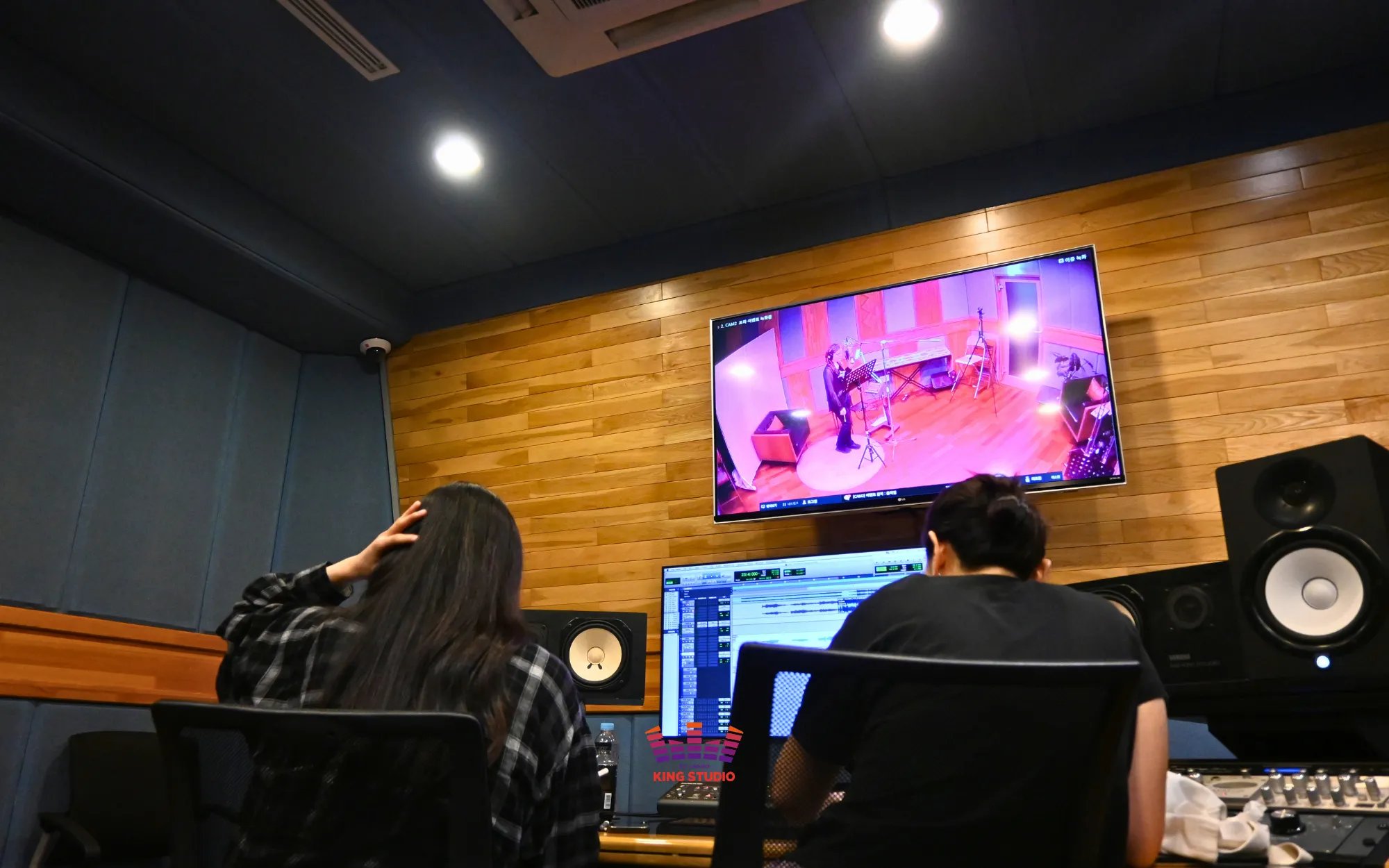
With the key settled, the recording ran the way an idol title track is genuinely assembled — part by part, layer by layer. Each section was tracked first as a main vocal. Then the same part was recorded again as a doubling pass, sung to match the first take closely enough that the two blend into one thicker line rather than sounding like two people. Then the ad-libs, the runs and calls that sit around the main melody and give an idol track its energy. Dubbing passes filled in the remaining layers.
Each of those passes does a different job. The main vocal carries the melody and the words. The doubling pass exists to make that line sound bigger without sounding double-tracked, which means it has to match the original in timing and phrasing closely — a doubling take that drifts is worse than no doubling at all. The ad-libs do the opposite: they are deliberately not identical, sitting in the gaps the main line leaves. The dubbing passes fill in the remaining layers the arrangement asks for.
This is the part most visitors do not anticipate. Singing the song once is one job. Singing it four ways, with each pass serving a different function in the final mix, is what separates a recording session from karaoke — and it is the reason the finished file sounds like a production rather than a demo.
STEP 6 Final monitoring and the take-home master
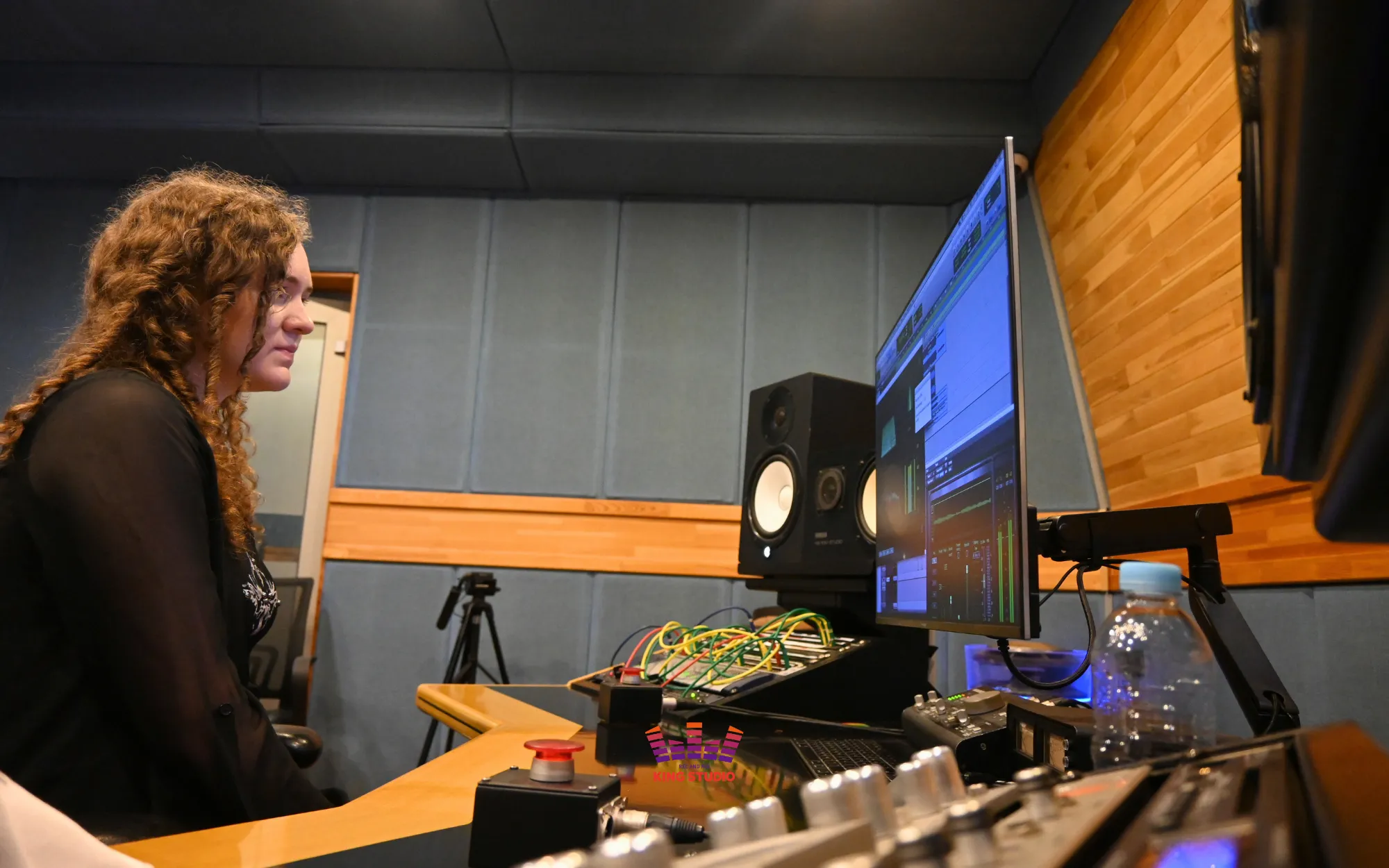
Hearing the layers played back together, stacked into a single track, was the moment the day paid off — and it landed hard. What she heard in the room was already a full arrangement of her own voice. Because DIAMOND includes mixing and mastering, the file she leaves with is not the raw monitor mix but a finished master, and the post-production stage is where the doubling and ad-libs recorded that afternoon get balanced into their final places.
In Her Own Words
Jenna's review after recording ATEEZ HALAZIA
"I think the one I did last time was definitely more comfort… comfortable. This one was definitely outside of my comfort zone, so hard, but it was really fun to try something different." — Jenna, USA
Frequently Asked Questions
Q. What does the DIAMOND service include?
A. You record your chosen song, work through pitch and timing correction with a vocal director, and the track is mixed and mastered into a finished file you take home. Take-home produced recordings begin at this tier. A session like this one — main vocals, doubling, ad-libs and dubbing across a full idol arrangement — is what DIAMOND is built for. Pricing: DIAMOND service page.
Q. What is GOLD / Personal Vocal?
A. A 120-minute session focused on your voice rather than a finished product: a vocal diagnosis covering range, timbre and habits, coaching, personalised song recommendations, and ~30 minutes of hands-on booth recording. The recording is an unedited experience; your take-home deliverable is a PDF Personal Vocal report, not an audio file.
Q. What is PREMIUM?
A. DIAMOND plus a full K-pop music video filmed during your session.
Q. What is the K-Pop Making Class?
A. A group service for 2–15 people: one song split into idol-style parts, each person recording their own lines, comped into a single track.
Q. Can I record a song written for the opposite vocal range?
A. Yes — changing the key is a normal part of the session, as it was here.
Plan Your Own Recording Day
A Korea Travel itinerary built around K-pop usually stops at concerts, company buildings and merch shops — all things you watch. A recording session is the one part you do. For how the services differ before you book, start with the complete KING STUDIO recording guide.
➡️ Book your DIAMOND experience now
🎙️ Book your own K-Pop session → Book your DIAMOND experience now
🌐 Visit us: https://kingstudio.co.kr/en
💎 Read more about DIAMOND : kingstudio.co.kr/blog/diamond
📍Address (Google) : B1 52, Samseong-ro 75-gil, Gangnam-gu, Seoul
📍Address (Naver) : 서울시 강남구 삼성로 75길 52 B1
 Booking Inquiry