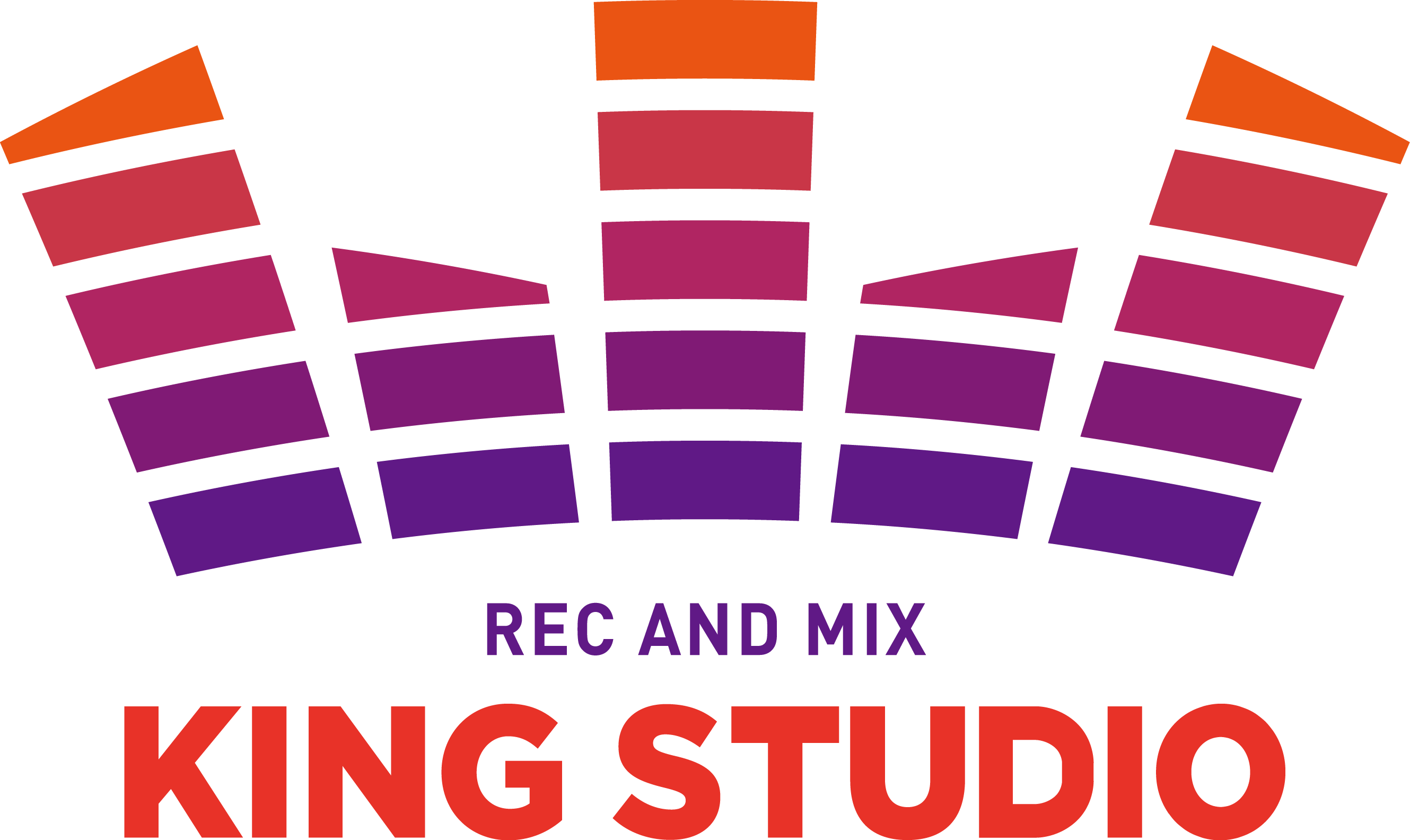
Seoul Trip: Recording Gracie Abrams "I Love You, I'm Sorry"
What actually happens inside a GOLD Personal Vocal session? A young visitor from the USA spent part of her Seoul Trip finding her voice type — and recording Gracie Abrams' "I Love You, I'm Sorry" on a real K-pop studio chain
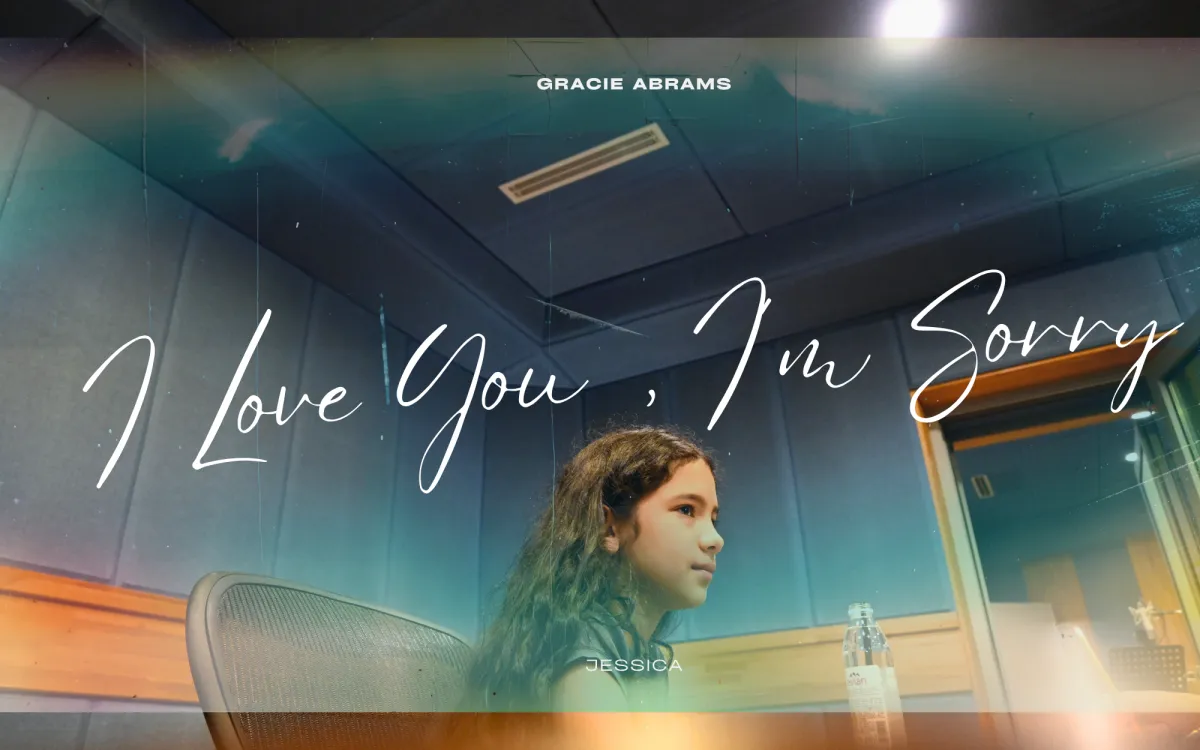
What a GOLD Personal Vocal Session Actually Looks Like 🎤
A GOLD Personal Vocal session at KING STUDIO in Seoul is a 120-minute program where an international visitor gets a professional vocal diagnosis, one-on-one coaching from a vocal director, and a hands-on booth recording experience — finished with a personalized PDF vocal report to take home. That is exactly what Jessica, a young visitor from the USA, came for on her Seoul trip with her mom — and she left having recorded Gracie Abrams' "I Love You, I'm Sorry" on a real professional studio chain. Here is that session, step by step. ✨
- Why This Song: A Voice-First Session
- The GOLD Personal Vocal Session, Step by Step
- KING STUDIO Recommends: After Your Session in Seoul
- In Her Words
- KING STUDIO Services: Quick FAQ
Why This Song: A Voice-First Session
Most visitors walk into KING STUDIO with a song already picked. Jessica's session started from the opposite end — and that reversal is the whole story.
Her mom booked the GOLD Personal Vocal session as her event for Jessica, and the goals they stated at intake were refreshingly concrete — in almost exactly these words: find her voice type, get coaching, be given exercises to work on at home to improve, and record a song. Not "have fun in a studio" — an actual development plan, compressed into one Seoul afternoon. It is worth pausing on that list, because every step of the session that followed maps onto one of those four goals, and by the end of this post you will be able to check them off one by one.
That framing changed how the song was chosen. Instead of Jessica naming a track, vocal director Yena listened to her voice first — running her through pitch- and timing-centered training to hear her natural range, timbre, and habits — and then recommended the song that fit what she heard: "I Love You, I'm Sorry" by Gracie Abrams. It was Yena's pick for Jessica's voice, not a request; the voice came first and the song came second.
It turned out to be a demanding choice in a quiet way. "I Love You, I'm Sorry" is the third single from Gracie Abrams' 2024 album The Secret of Us, written by Abrams with Aaron Dessner and Audrey Hobert — a hushed, confessional pop ballad rather than a big vocal showcase. And yes: KING STUDIO is a K-pop recording experience program, but the song in the booth does not have to be K-pop. The program's method — diagnosis, directing, a professional chain — transfers to any song, and on this day it was applied to an American pop ballad. Songs like this hide nothing. There are no walls of production to stand behind, so the two most basic mechanics of singing — timing and breath — sit completely exposed. And those were exactly the two places where Jessica's session found its work. In the verses, she tended to rush ahead of the beat, arriving at each line a fraction early. In the chorus, her breaths were running short, so the ends of phrases kept collapsing before the note finished. Neither is unusual — they are two of the most common habits a first professional session uncovers — but on a bare, intimate ballad, both are audible immediately.
That is what made this the right song for a Personal Vocal session. It did not ask Jessica to belt above her range or survive a rap section; it asked her to be steady and to breathe in the right places — which is precisely the foundation the GOLD program is built to diagnose and fix, and precisely what a singer can keep practicing at home once she knows what to listen for. The song was the mirror; the session was about learning to look into it.
The GOLD Personal Vocal Session, Step by Step
Step 1 — Arrival and Intake
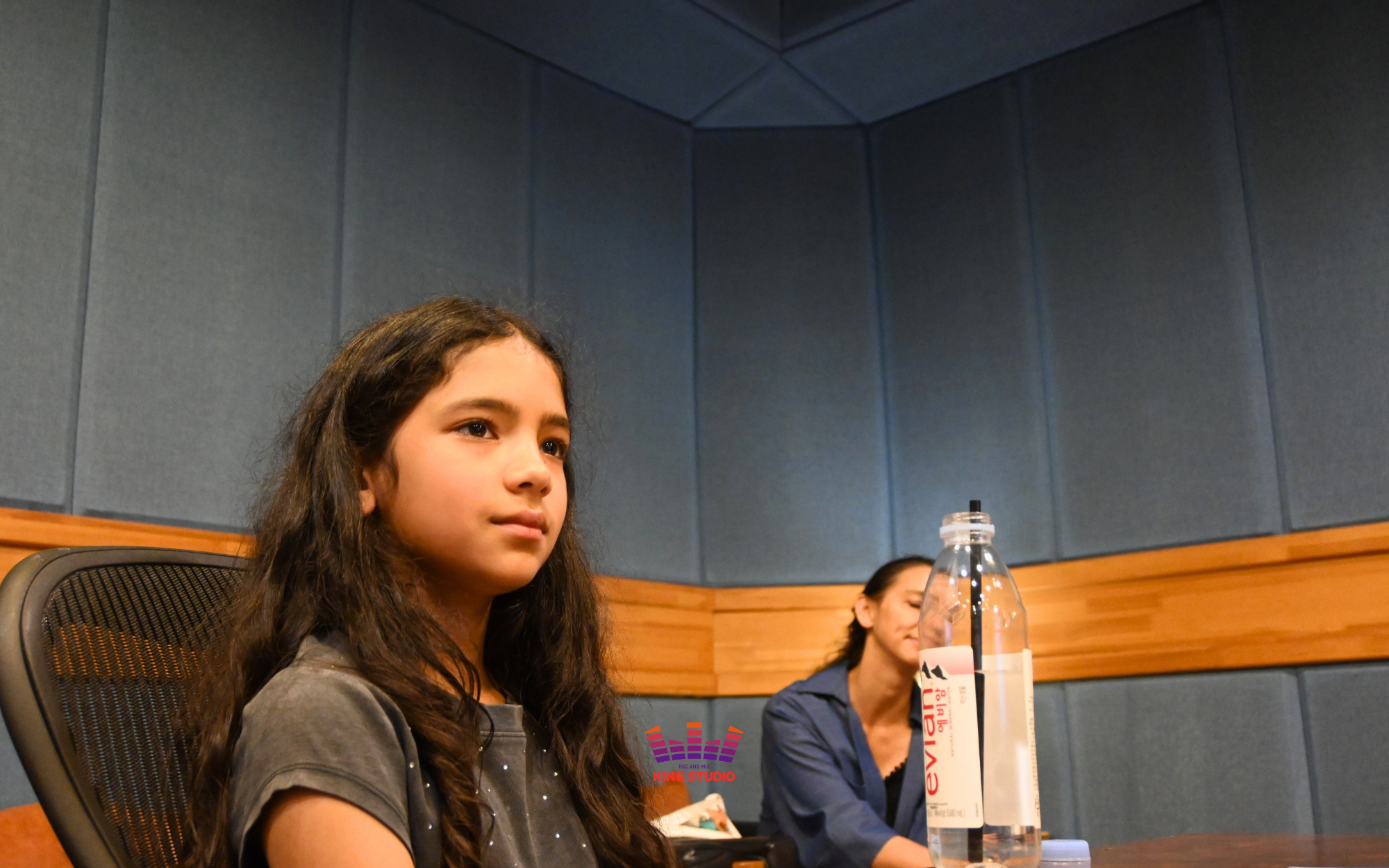
Jessica walked into KING STUDIO with her mom for her first visit. Producer Aiden welcomed them and introduced the team for the day: vocal director Yena, who would run the training and directing, and manager Jinny, who would support and interpret throughout the session so nothing got lost between languages. The intake conversation put the four targets on the table — voice type, coaching, take-home exercises, and a recording — so that everything that followed had a job to do. From the first minutes this was framed as Jessica's development session, her mom's event for her daughter, with mom watching from the couch as Jessica took the room.
Step 2 — Vocal Diagnosis: The 50-Minute Training Block
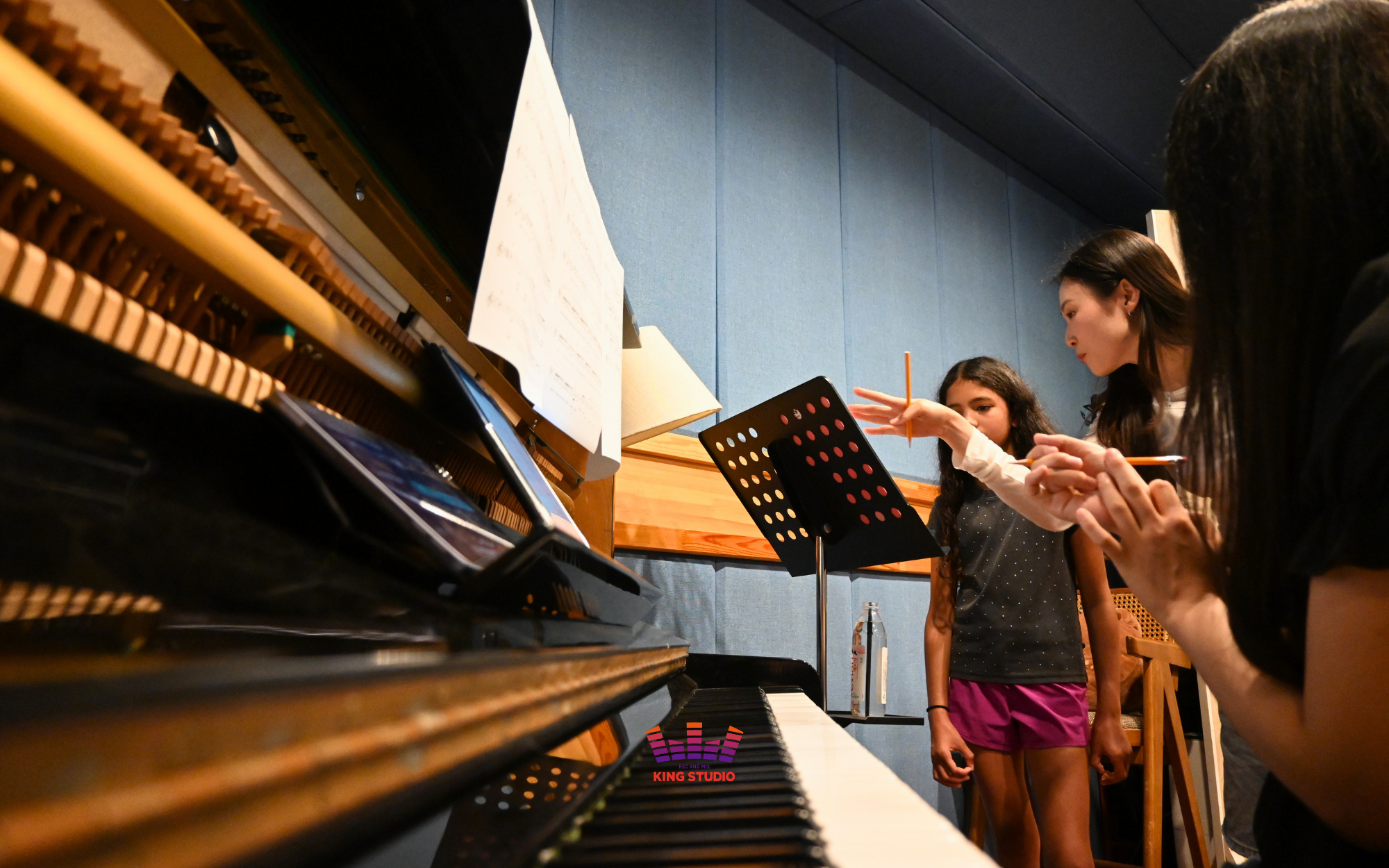
The heart of the first hour was a 50-minute vocal training block with Yena. It opened with simple warm-up training, then moved into work built around the song Yena had selected, focused on pitch and timing. This is where the diagnosis happened in real time: as Jessica sang, Yena was mapping her characteristics — where her range sat comfortably, how her timbre behaved, and which habits showed up under pressure.
The two findings that would shape the rest of the session surfaced here: the tendency to rush ahead of the beat in the verses, and the short breaths that were cutting off her phrase endings in the chorus. Within that first block, Yena had a clear picture of Jessica's voice type and a specific plan for what to fix before the booth.
Step 3 — Coaching: Two Fixes and a Key
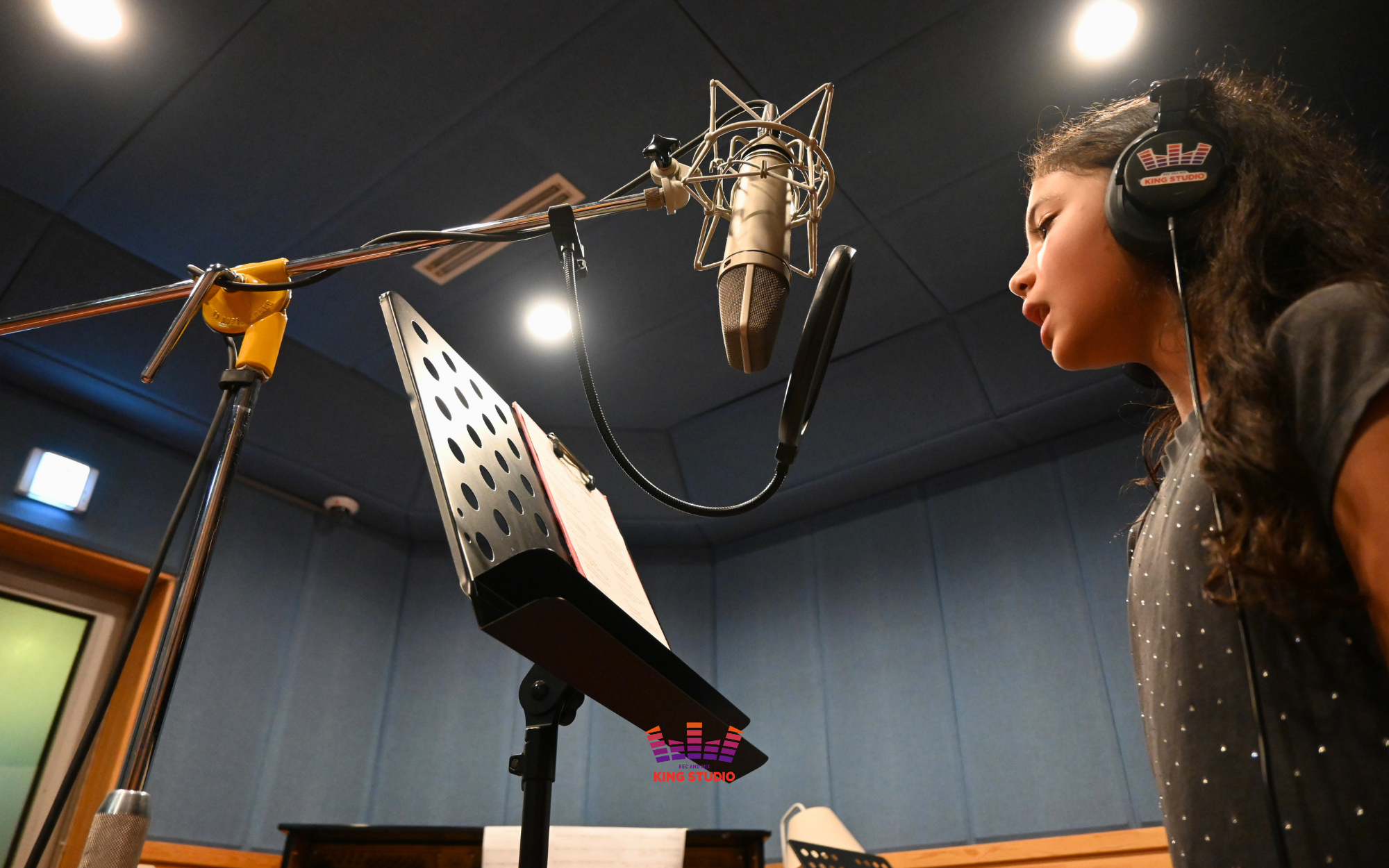
The coaching stage turned the diagnosis into changes you could hear.
For the verses, Yena went after the rushing directly with count practice — slowing the pulse down and having Jessica place each entrance on the count rather than ahead of it, repeating until the timing locked in. The fix was not "sing slower"; it was retraining where the line begins.
For the chorus, the target was breath placement. Jessica's instinct, like most first-time singers, was to take bigger breaths — but the real problem was where the breaths happened, not their size. Yena reset the breathing points inside the phrase, and the difference was immediate: the last notes of each chorus line finally held instead of falling away.
The third piece of preparation was the key. Before any recording, the backing track was adjusted to the key where Jessica could sing the song most comfortably — divided into her parts and matched to the range Yena had mapped in the diagnosis block. On a ballad this exposed, singing in the right key is the difference between fighting the song and inhabiting it.
Step 4 — The Booth: A Real Recording Experience
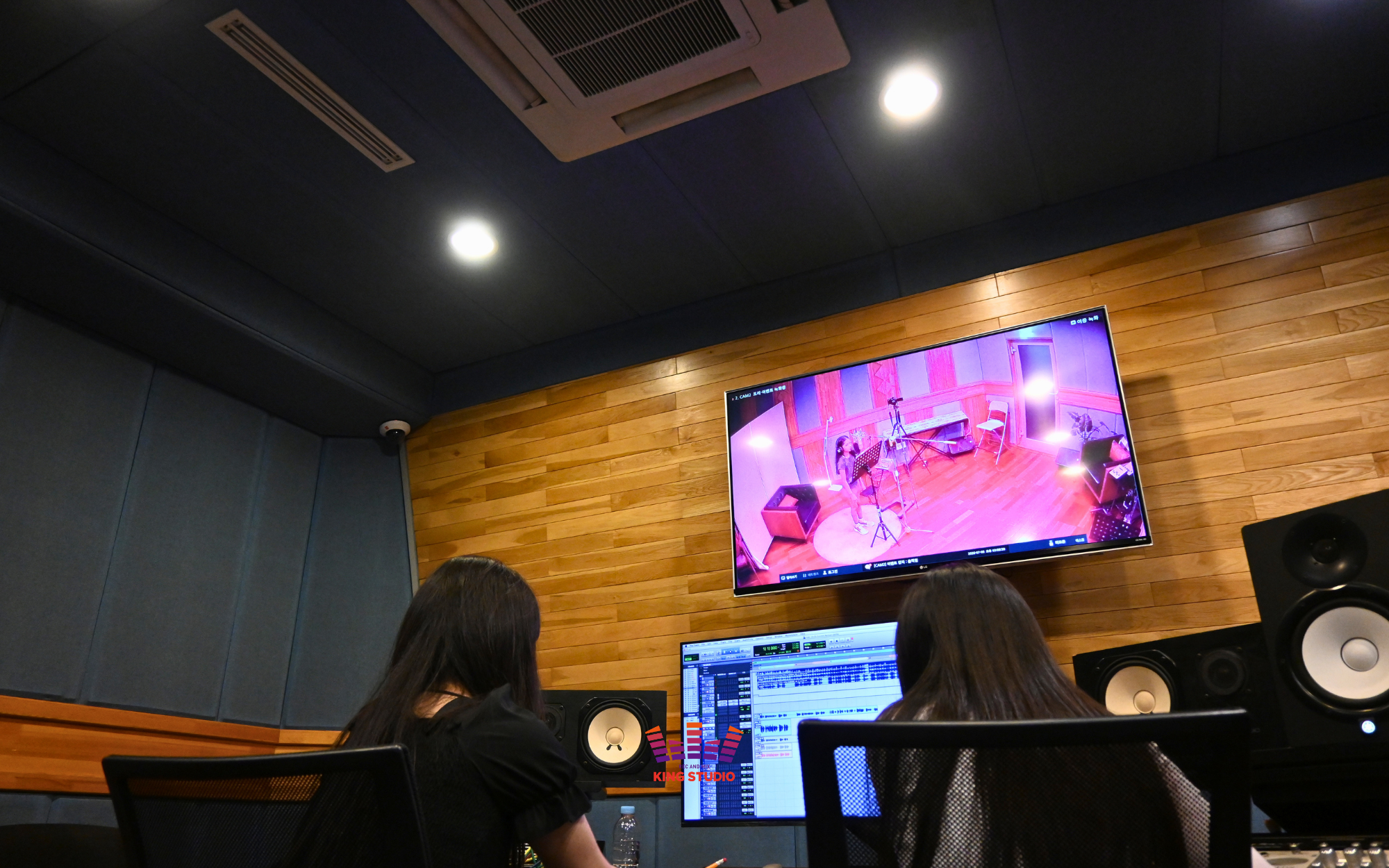
Then came the part Jessica would talk about afterward: stepping into the booth and, in her own words, "putting my voice in that cool microphone."
The recording was run lightly but in the same manner a working Korean artist's session would be — headphones on, the adjusted backing track in her ears at the monitoring balance set for her voice, singing her divided parts into a professional microphone on a real studio chain. Yena directed from the other side of the glass, and this is where the session's structure paid off: the directing was built directly on what they had just practiced together. When a verse entrance drifted early, Yena brought back the count. When a chorus ending thinned out, she called the breath placement. Jessica was not being given new instructions in the booth; she was applying, take by take, the exact fixes she had rehearsed an hour earlier — which is what made the improvements stick instead of evaporating under recording pressure.
For a GOLD session, this booth stage is a hands-on recording experience of roughly thirty minutes — unedited and real, designed to let a visitor feel what singing on a professional chain is actually like.
Step 5 — Final Monitoring and the Take-Home Report
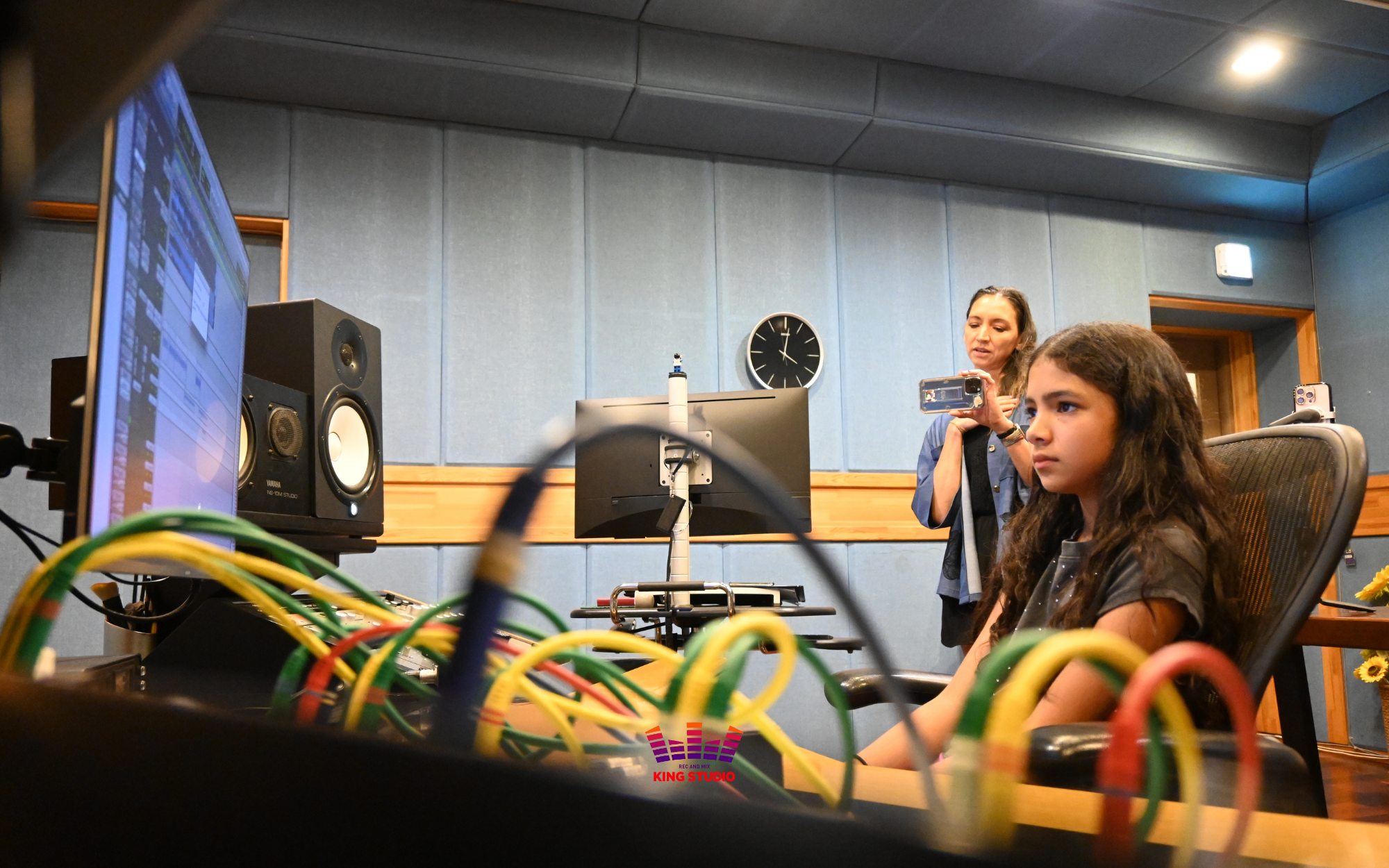
With the recording done, Jessica sat for a final monitoring session, listening back through the studio's monitoring environment to the takes she had just sung. For most GOLD visitors this is the first time they ever hear their own voice played back on studio monitors, and it is where the session's work becomes audible to the singer herself: the verse entrances landing on the count, the chorus endings holding to the last note.
The take-home from a GOLD Personal Vocal session is knowledge, not audio: a personalized PDF Personal Vocal report covering her voice type, the habits identified, and the exercises to keep working on at home — which was, from the first minutes of intake, exactly what she and her mom had asked for. (A finished, mixed-and-mastered recording to keep is the domain of the DIAMOND tier; the GOLD booth recording is an experience, not a deliverable.) Before leaving, Jessica filmed a short review video for future KING STUDIO visitors — the moment her session became part of the studio's story.
KING STUDIO Recommends: After Your Session in Seoul
Hongdae's busking streets
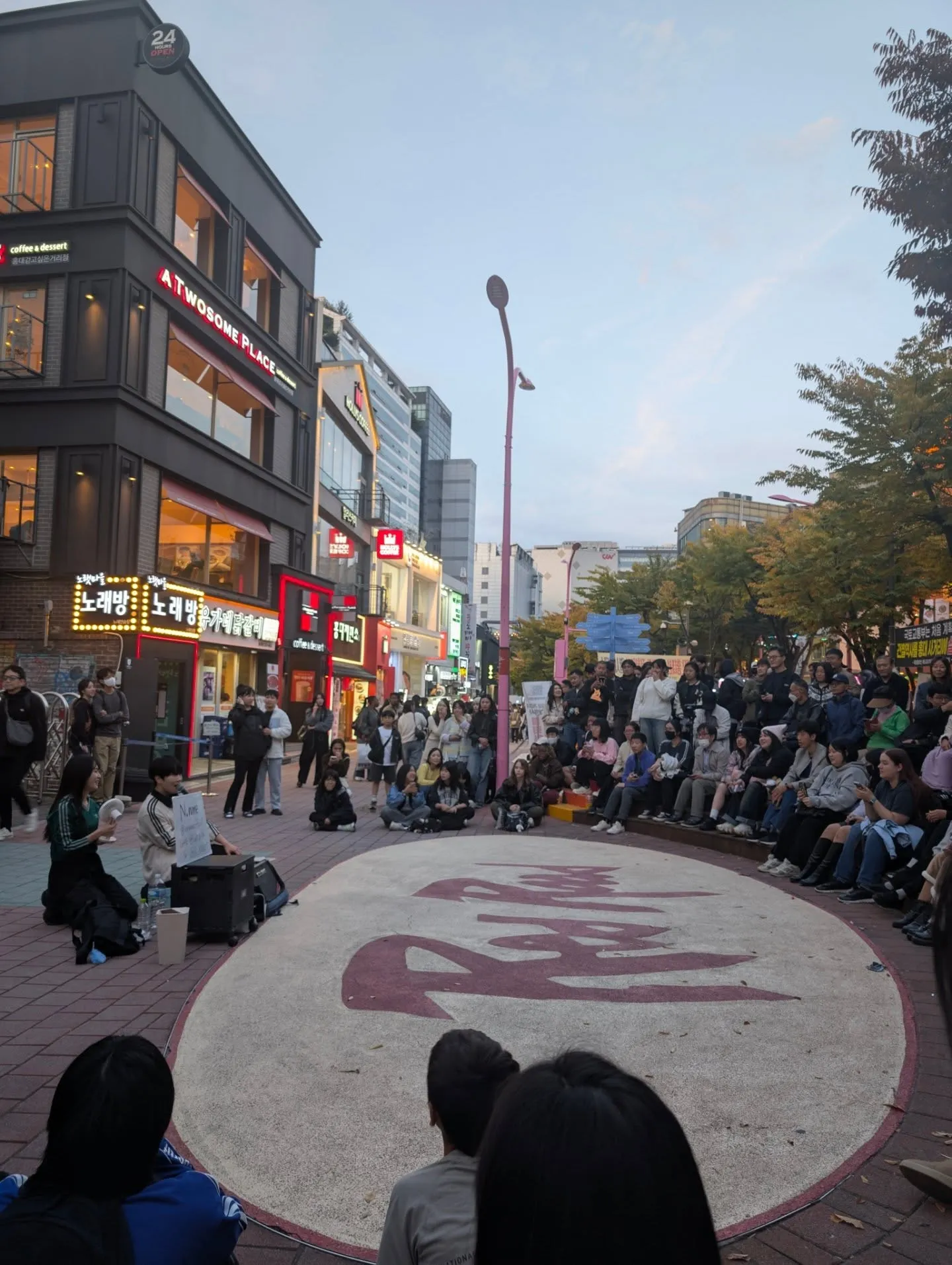
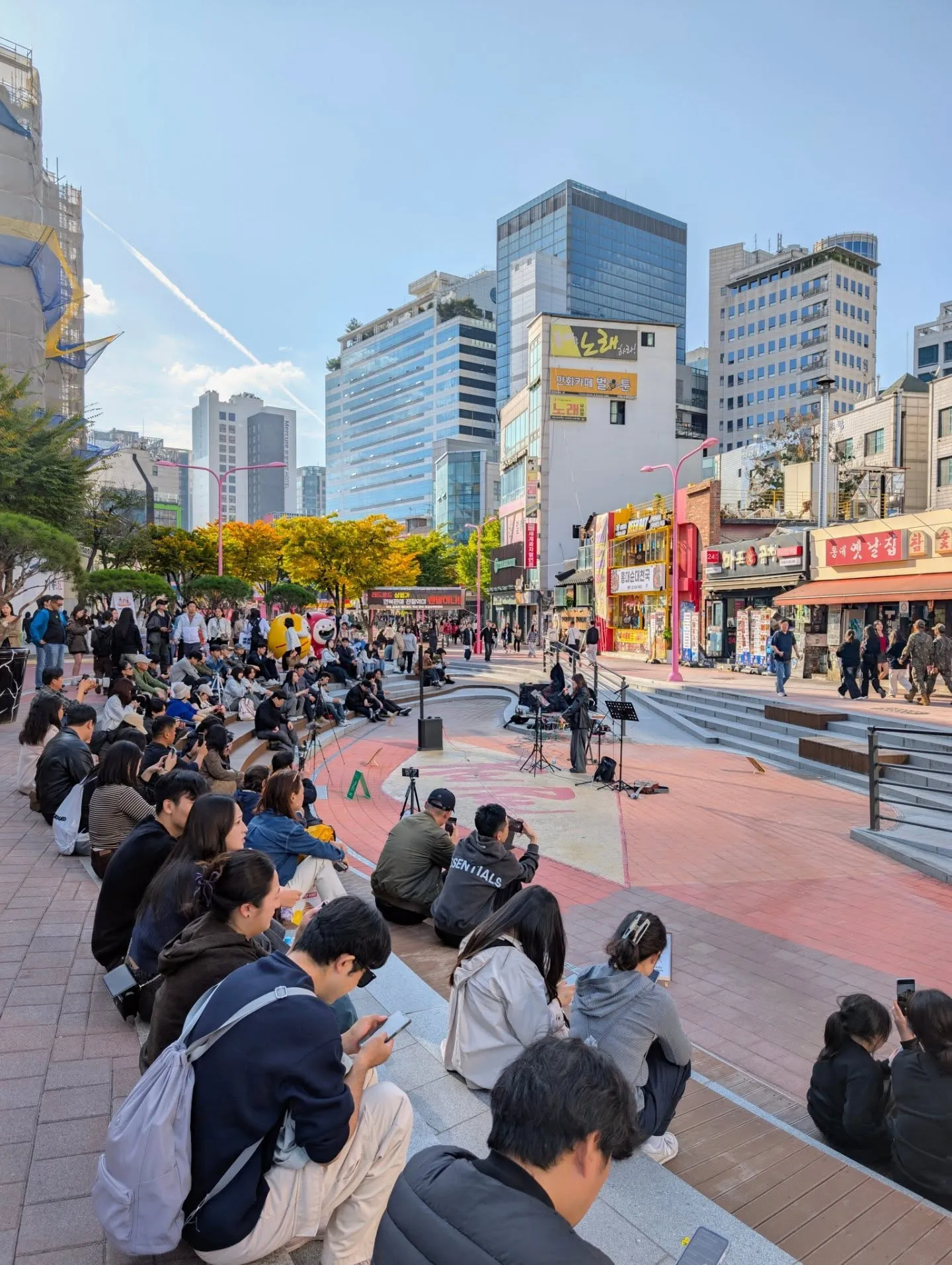

Seoul's densest live-music street culture; go in the evening and follow the sound. Budget $10–20 USD for street food.
📍Address (Google) : Seogyo-dong, Mapo-gu, Seoul
📍Address (Naver) : 서울 마포구 서교동
A Han River park at sunset

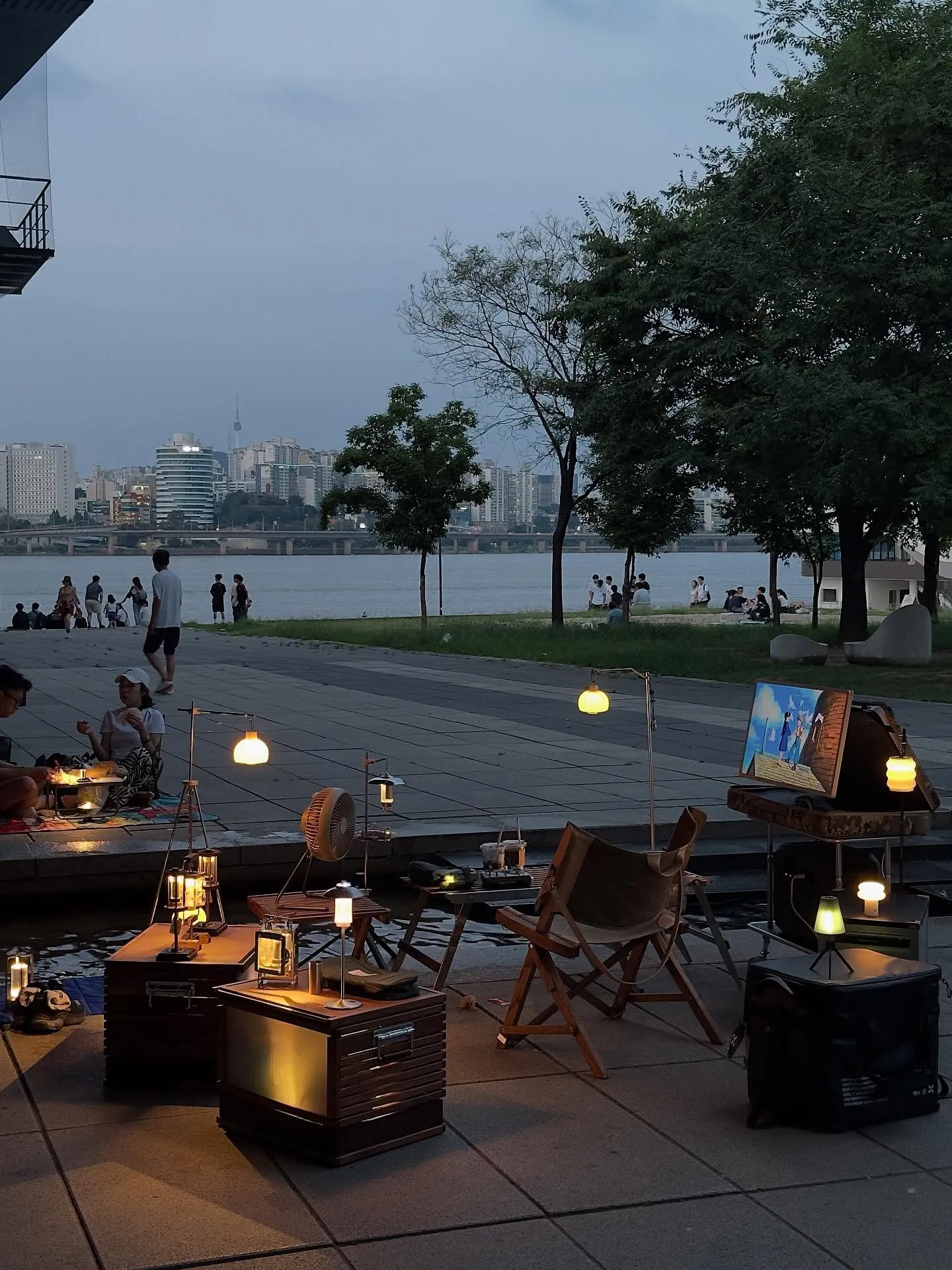

Picnic mat, session playlist, convenience-store snacks.
📍Address (Google) : Yeouido-dong 8, Yeongdeungpo-gu, Seoul
📍Address (Naver) : 서울 영등포구 여의도동 8
In Her Words
Jessica filming her review video after the GOLD Personal Vocal session
"So I loved singing and how you gave us great feedback, and I think it really helped me." — Jessica, after her GOLD Personal Vocal session
She also told us the fun of it was, verbatim, "putting my voice in that cool microphone" — which, honestly, is the GOLD experience in seven words.
KING STUDIO Services: Quick FAQ
Q. What is the GOLD (Personal Vocal) session?
A. A 120-minute program: vocal diagnosis of your range, timbre, and habits; one-on-one coaching with targeted fixes plus personalized song and genre recommendations; a roughly 30-minute hands-on booth recording experience; and a PDF Personal Vocal report as your take-home. The booth recording is an unedited experience — there is no take-home audio file at this tier.
Q. What is DIAMOND?
A. The full production tier: record a song of your choice, with pitch and timing correction, mixing, and mastering — and a finished take-home master. Take-home produced recordings begin at this tier.
Q. What is PREMIUM?
A. Everything in DIAMOND, plus a full K-pop-style music video filmed during your session.
Q. What is the K-Pop Making Class?
A. A group program for 3–15 people: one song split into idol-style parts, each member recorded on their own lines, comped into a single track.
Q. Do I need to sing a K-pop song?
A. No — Jessica recorded an American pop ballad. The "K-pop" in the program refers to the studio, the equipment, and the production method, not a restriction on your song.
Current pricing and availability live on the booking page — see the complete KING STUDIO recording guide below.
Make it part of your Korea travel plan
Scarlet came from the USA to find her voice type. After part-by-part coaching with vocal director Yena, she told us the specific feedback is what moved her singing forward — and the pro mic and camera were the fun part.
➡️ Book your DIAMOND experience now
🎙️ Book your own K-Pop session → Book your DIAMOND experience now
🌐 Visit us: https://kingstudio.co.kr/en
💎 Read more about DIAMOND : kingstudio.co.kr/blog/diamond
📍Address (Google) : B1 52, Samseong-ro 75-gil, Gangnam-gu, Seoul
📍Address (Naver) : 서울시 강남구 삼성로 75길 52 B1
 KING STUDIO
 Booking Inquiry